Mattress Education
Organic Bedding Materials: How Cotton, Wool, and Certifications Compare
Cotton and wool can both bring natural comfort to a bed, but they do different jobs—and the word “organic” doesn’t tell the whole story. Here’s how to compare materials, understand what a certification actually covers, and choose bedding that suits your sleep habits and care routine.
Published October 18, 2026
Shopping for organic bedding can feel like entering a world of reassuring words: natural, breathable, responsibly sourced, chemical-free. Some of those descriptions may be meaningful; others need more context. A fabric can be made from organic cotton while its fill, dyes, or finishing treatments follow different standards. Wool can be described as natural without being certified organic. And a label on one component doesn’t automatically certify the entire finished product.
The good news is that comparing bedding does not require a textile-science degree. Start with the basics: identify each material’s role, look for specific information about the product’s components, and treat certifications as useful clues—not as a substitute for reading the details. Whether you are choosing a mattress pad, a wool layer, or a complete mattress, a little label literacy can make the decision feel much clearer.
First, what does “organic bedding” mean?
Organic bedding is an umbrella phrase, not a single recipe. It may refer to cotton grown under an organic agricultural standard, wool from sheep raised under specified practices, or a finished textile certified against broader rules for processing and manufacturing. A product could contain one certified fiber alongside other materials that are not certified—or it may use natural materials without carrying a third-party certification at all.
That distinction matters because a finished bed product can have several layers. A mattress pad, for example, might use cotton for its outer fabric, wool or cotton for its filling, and elastic or thread made from other fibers. A mattress may combine a natural latex core with cotton ticking and wool batting. Each component has a purpose, and its claims may have a different scope.
So when a package says “organic,” ask a practical follow-up: Which part is organic, and how do we know? The answer should be specific enough to identify the fiber or component, the standard, and—ideally—the certification or transaction documentation behind the claim.
Cotton: the familiar fabric with plenty of variations
Cotton is commonly used in bedding covers, sheets, mattress ticking, and pad fill. It is a familiar plant fiber with a soft hand, and its comfort depends on more than whether it is organic. Weave, yarn, finishing, weight, and construction all shape how a textile feels and performs. A smooth cotton sateen cover, for instance, can feel quite different from a crisp percale weave, even when both are made from cotton.
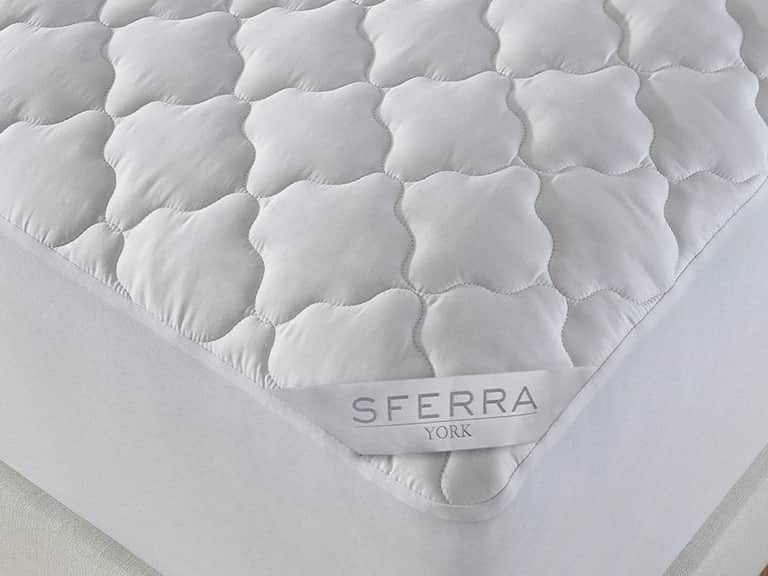
In a mattress pad, cotton may serve as the shell, the filling, or both. A cotton shell gives the surface its textile feel, while cotton fill can add a modest layer of loft and cushioning. For example, the York Mattress Pad uses cotton fill and a cotton sateen fabric. Its product details also include specific laundering directions, an important part of the comparison: a material that suits your preferences on day one should also work with the way you care for bedding at home.
Organic cotton claims are about how the cotton was grown and handled under a defined standard—not a guarantee that the finished product is automatically perfect for every sleeper. They do not, by themselves, tell you whether a pad will feel plush or firm, how warm it will sleep, how durable its stitching is, or whether the whole item can go in a washing machine. Those are separate questions worth checking in the product specifications.
For a fair comparison, look beyond a large “organic cotton” headline. Find out whether the claim refers to the cover, the filling, or all cotton in the item. Then check the weave or construction, the care label, and whether the fabric has been dyed or finished in ways that matter to your household. Specific descriptions are more helpful than broad assurances.
Wool: a resilient layer with a different feel
Wool is often used as batting, padding, or a mattress layer rather than as the main woven cover. Its structure gives it a springy, resilient character, and wool is valued in bedding for its ability to buffer moisture and help moderate temperature. Those qualities can make it an appealing option for people who want a natural-feeling layer without the same plush, cotton-fill sensation.
But “wool” describes a fiber, not a uniform experience. The thickness, density, processing, and placement of wool affect the finished feel. Wool in a thin pad will behave differently from wool quilted into a mattress, and a wool layer is not a promise that every sleeper will feel cooler or warmer. Room temperature, sleepwear, mattress construction, and personal comfort all play a part.
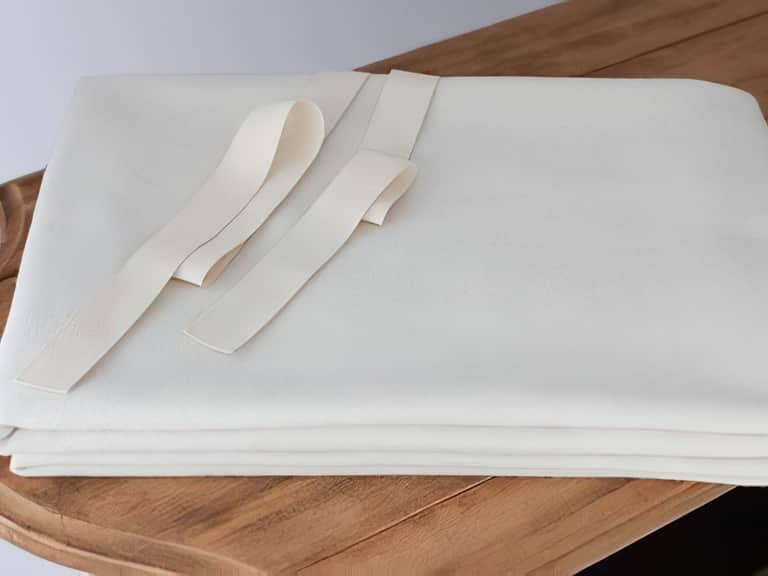
The Savvy Rest Wool Mattress Pad is described as a densely woven natural-wool layer, with removable cotton corner ties. Its care instructions call for hand washing in mild detergent and line drying. That is a useful reminder that natural materials may ask for a different routine than a standard machine-washable protector. Before choosing any wool bedding, think about whether its care requirements fit your household—not just whether its fiber story sounds appealing.
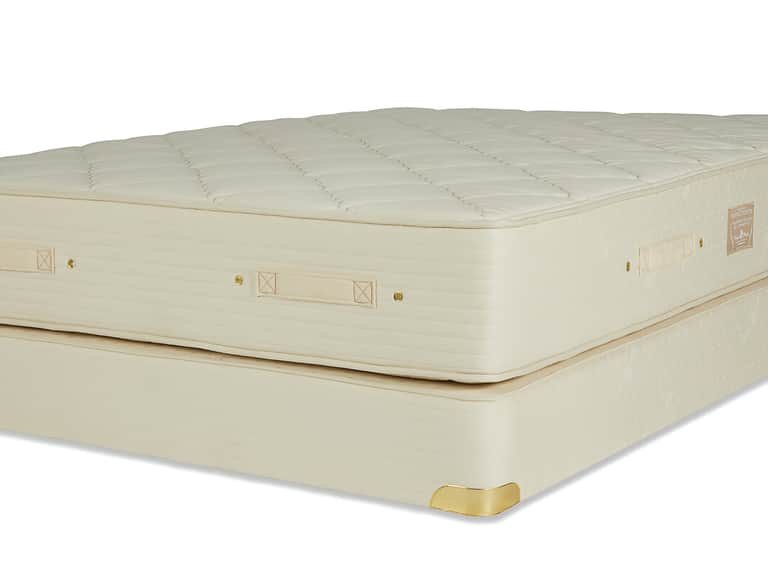
Wool can also be part of a mattress’s internal construction. In the Royal-Pedic Natural Latex Quilt-top Mattress, the described construction combines a natural latex core with cotton covering and wool. The listing explains that wool is quilted around the core and describes its role in moisture management and temperature regulation. This illustrates how materials can work together: cotton provides a textile surface, wool forms a cushioning layer, and latex supplies the core. It is the construction as a whole—not any single fiber name—that shapes the experience.
Wool sourcing claims also deserve a close read. “Natural wool” does not necessarily mean “certified organic,” and an organic claim should be supported with information about the relevant standard and component. If animal welfare or farm practices are a priority, look for a standard that specifically addresses those concerns rather than assuming that one environmental label covers every issue.
Cotton versus wool: what’s the difference at bedtime?
Neither fiber is automatically the better choice. Cotton often appears as a cover or fill and can offer a familiar, soft textile feel. Wool is frequently used as a batting or cushioning layer and can add resilient loft while helping manage moisture. Both may appear in the same product, where each has a distinct job.
| What to compare | Cotton | Wool |
|---|---|---|
| Common bedding role | Woven covers, ticking, sheets, or fill in a pad | Batting, padding, or a layer within a mattress or topper |
| Feel and construction | Varies with weave, fabric weight, and whether it is used as fill | Varies with density, thickness, quilting, and processing |
| Care questions | Check whether the specific fabric or filled item is machine washable | Check for hand washing, spot cleaning, or other limited-care directions |
| Certification question | Does the claim cover the cotton fiber, the fabric, or the finished item? | Does the claim cover the wool source, processing, or finished product? |
Use this comparison as a starting point, not a ranking. A cotton-filled pad may be a sensible match if you want a familiar surface and the care instructions suit your routine. A wool layer may appeal if you prefer its feel and are comfortable following its particular cleaning guidance. If you are sensitive to heat, moisture, or particular fibers, consider the entire sleep setup and consult a qualified health professional for persistent concerns rather than relying on a material claim as a treatment.
How to read bedding certifications without getting lost
Certifications can help clarify how materials were grown, processed, or tested, but different programs assess different things. One may focus on organic fiber production; another may set limits for certain substances in a finished textile. A certification is useful only when you know what it covers and whether it applies to the product you are considering.
For cotton and other textiles, the Global Organic Textile Standard (GOTS) is one example of a standard that addresses organic fibers and textile processing through defined criteria. Its scope and label categories matter: a product’s certification status should be checked against the current standard and the certification documentation, not inferred from a casual mention of the name. A label on fabric or a supplier’s input does not necessarily mean that every part of a finished bedding product is certified.
Other labels may address different questions. OEKO-TEX standards, for example, are associated with testing textiles for specified substances; they should not be treated as interchangeable with an organic-fiber certification. Similarly, animal-welfare or responsible-wool programs may focus on aspects of wool sourcing that an organic textile label does not necessarily address. Always consult the organization’s own current description of its standard, since requirements and scope can change.
When comparing claims, look for the certification name and the exact product or component covered. A transparent description might identify certified organic cotton in the cover while separately listing wool filling or elastic. If the label is vague, ask whether the finished article is certified, whether only a material supplier is certified, and whether a certificate number or other verifiable documentation is available.
It also helps to separate certification from marketing language. Words such as “eco-friendly,” “clean,” “green,” and “chemical-free” can be broad or imprecise. No textile is literally free of chemicals, since fibers and materials are made of chemical substances. A meaningful claim should tell you what was excluded or tested, by which standard, and for which part of the product.
A quick checklist for comparing organic bedding
Before you buy, take a minute to look past the headline claim. These questions can make product descriptions easier to compare and help you choose based on real-life needs:
- What is each layer made of? Separate the outer fabric, fill, core, elastic, and any backing or lining.
- Which component is certified? Confirm whether the claim applies to the fiber, fabric, filling, or finished item.
- What does the certification assess? Organic cultivation, textile processing, chemical testing, and animal welfare are not the same category.
- Can the claim be verified? Look for a named standard and clear documentation, and check the certifier’s current information.
- How will it feel in your bed? Consider thickness, loft, weave, and how the layer interacts with your mattress and sheets.
- What is the care routine? Compare machine-washing, hand-washing, spot-cleaning, drying, and any restrictions.
- Does it fit the mattress? Check size, depth, attachment method, and whether the item is designed for your sleep surface.
- Are the claims appropriately specific? Prefer plain descriptions of materials and standards over sweeping promises.
This checklist is especially helpful when one product offers a detailed materials breakdown and another relies on a single prominent label. The more precise description may not automatically make one option right for everyone, but it gives you better information with which to decide.
Care is part of the material story
Organic bedding can still need careful maintenance. Cotton pads may have washing instructions that limit water temperature, detergent, or machine type. Wool layers may need gentle hand washing or line drying. A mattress itself usually cannot be treated like a removable cover, so check the manufacturer’s guidance before applying water or cleaning products.
Follow the item’s care label rather than assuming that all cotton or wool can be cleaned the same way. Overly hot water, harsh detergents, aggressive agitation, or high-heat drying can affect fibers and construction. For spills, act according to the manufacturer’s directions and allow the surface to dry fully before remaking the bed. If a product has a removable cover, check whether only that cover is washable or whether the entire item can be cleaned.
Care needs are not a minor footnote. They shape the long-term practicality of a bedding choice. A washable cotton-filled pad may be easier for some households to maintain, while a wool pad’s particular hand-wash routine may be entirely manageable for others. The best fit is the one whose feel, materials, and upkeep all work for your life.
Common myths about organic and natural bedding
Myth: Natural means organic. Natural describes a material’s origin in broad terms; organic refers to production under specific standards. A wool or cotton product may be natural without being certified organic.
Myth: One certification covers every concern. Certification programs have defined scopes. A standard that addresses organic fiber production does not necessarily answer questions about every chemical, animal-welfare practice, or finished-product component.
Myth: Organic always means more comfortable. Comfort is personal and depends on design, firmness, temperature, fit, and sleep preferences. A certification does not predict whether a pad’s loft or a mattress’s feel will suit you.
Myth: A material claim tells you how to care for the item. Fiber content alone cannot replace the care label. Construction and finishing can change what cleaning methods are appropriate.
Myth: “Chemical-free” is a complete safety description. The phrase is too broad to explain what has been tested or excluded. Look for a named standard and details about the substance or process being discussed.
The bottom line: choose the details, not just the label
Cotton and wool can both be thoughtful choices for bedding, but they bring different qualities to a sleep surface. Cotton commonly forms the fabric or fill, while wool is often used as a resilient, moisture-managing layer. In a well-described product, the materials work together—and the details explain how.
When evaluating organic bedding, look for a clear breakdown of what is in the product, which components carry a certification, what that certification actually covers, and how the item should be cared for. Then weigh those facts against your comfort preferences, mattress type, and household routine. A trustworthy choice is not simply the one with the most impressive label. It is the one whose materials and claims you can understand, verify, and live with comfortably.
Frequently asked questions
Is organic cotton bedding always better for sensitive skin?
Not necessarily. Organic status describes production under a standard; it does not guarantee that an individual will tolerate a particular fabric, dye, finish, or construction. Check the product details and seek medical advice for persistent skin symptoms.
Does wool bedding make a bed hotter?
Not in every case. Wool is often selected for its ability to help manage moisture and temperature, but the result depends on the layer’s thickness and density, the rest of the bedding, room conditions, and personal comfort.
What is the most important certification detail to check?
Start by confirming the exact product or component covered. Then read what the named standard evaluates and verify the claim through current certification information when possible.
Can cotton and wool be used together?
Yes. Many bedding constructions use cotton as a cover or fabric layer and wool as batting or cushioning. Their combined performance depends on the full design, so review the materials list and care instructions for the finished item.